
Industrial operations simulation versus AI-powered recommendations
With the emergence of powerful and easy-to-use generative Artificial Intelligence (AI) tools, why do we keep spending efforts on simulating industrial systems? Why don’t we simply ask ******** (intentionally blinded name!) to give us advice and guidance, evaluate the throughput, and resolve our bottlenecks? Alternatively: “Why don’t we ask ******* (blinded, again!) to develop for us a simulation model? That would save us so much effort!” Hey, this feels like recently heard questions!
Fundamentally, generative AI needs data, existing information and computerized knowledge to develop and train models. But what about new plants or plant expansions for which no data exists? And what about the human factors impacting operations efficiency that are not monitored by a process historian? Finally, what about people’s judgment from facts and statistical analyzes regarding the practical usefulness of recommendations?
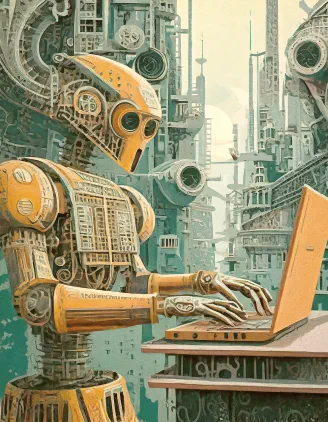
Today, processing of spreadsheets and common statistical modelling tasks is something generative AI systems can do. These systems are very assistive when it comes to writing computer code, assuming the request was clear enough. Some simple event-based simulation is also possible using these systems! However, it is limited to traditional queues and servers as described in probabilities textbooks.
What about simulating the full-scale complexity of an industrial production system, which is the purpose of Discrete Event Simulation (DES)? Hum, maybe AI is not up to the task yet! Here are some illustrations of items that simulation models and simulation experts consider vital:
- Results verification and validation
- Avoiding over-modelling (include fine details that are irrelevant to the study objective and scope but can introduce undesired noise and instabilities)
- Integration of non-computerized people’s know-how into a model (typically collected during site survey and interviews)
- Data preparation for simulation (not necessarily identical to data preparation for dashboards or statistical modelling!); ex.: if historical data on process stops include waiting for operator plus physical repair time, we cannot blindly apply the values from historical data to simulate repair times because waiting for operators will be added to the simulated times!
In other words, a DES model does not rely purely on computerized data and information. DES models capture the dynamic decision-making and effects of system interactions, process variations, random failures, competition for resources, logistical constraints, process constraints and other phenomena observed in real systems. Building a simulation model requires human workforce and people’s knowledge!
About teamwork and collaboration around simulation
When designing a new facility, it is very common during the engineering cycles to bring in-depth transformations to the latest design. When this happens, what project teams find valuable with a simulation is the ability to “observe” the impacts of the changes. The visualization of system dynamics, preferably in a 3D simulation environment, is very important.
When debottlenecking a process, it is very common to question ourselves whether it’s a model flaw or a system flaw. It needs a lot of modelling skills to determine which one is the right answer. It also requires a strong statistical and Lean mindset to find the root causes of the bottleneck, and a sound process expertise to find the appropriate solutions. Being able to stop code execution, trace in-memory values, etc., is very important. Being able to simulate customized and on demand “what if” scenarios is key!
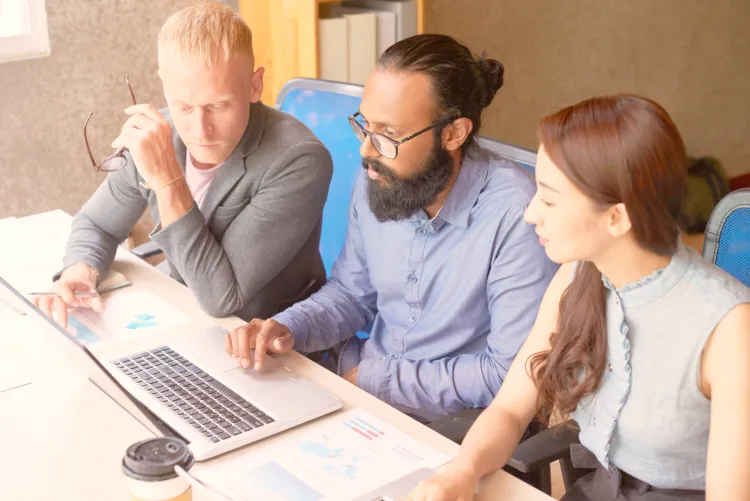
When elaborating alternative designs, remedies to system flaws, or operational improvements, mathematical tools (design of experiments, optimization) rarely discover magical and realistically applicable solutions. Human creativity, teamwork collaboration and people’s knowledge is crucial to determine the viability of potential changes, as there are many non-computerized constraints to consider in real life!
Legal considerations and intellectual property of AI and simulation
Ah, legally speaking… AI raises many concerns. What about, secrecy, confidentiality, ownership and intellectual property of a model’s code? Companies usually ask for the ownership of the model; how can this be done if a model was built by a black box system with hard-to-determine storage rules?
If I were a chartered engineer, I would have the obligation to understand and inspect any calculations used to support a design. This is very easy (sort of!) to do when I write my model’s code: I have access to all code lines; I can trace any strange result and debug. But AI is more or less like a black box: I can’t do that. How am I supposed to certify that I supervised everything and can explain any calculations? Which leads to this hard deontological limitation: I couldn’t put my professional seal and signature on work executed by cloud-based AI.
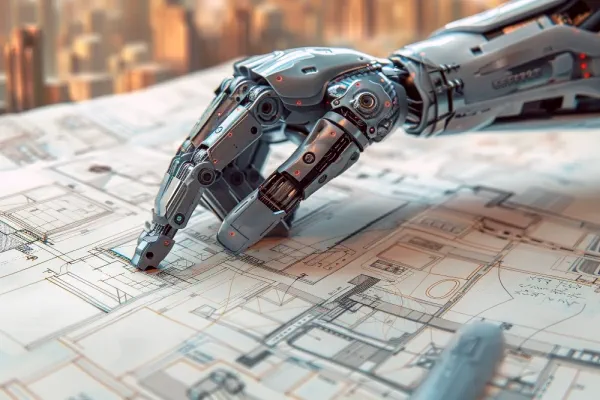
Ask yourself… Would you trust driving on a bridge designed by AI? Another example of non-applicability: in the mining industry, a standard report (NI 43-101) has to be filed before executing a mining project. The issuer must have at least one qualified person endorsing (thus, understanding and supervising) the entire report content. There is no jurisdiction yet accepting AI-provided recommendations instead of simulation-based recommendations.
In many context, professionals must ensure that sensitive data required to build a model remains safe in a secured space. This remark touches the cybersecurity of computerized works! Deploying AI means relying on cloud-based decentralized architectures. Can anyone afford building its own private data center to physically secure its AI instance? If not, be ready to share servers and hard drives...
Final thoughts on simulation and generative AI
Modelling the complexity of industrial operations, combining CAD drawings, assets specifications and human knowledge, capturing queuing effects and real-life variability, and doing this in a legally accepted framework is maybe not AI-ready yet. Developing a simulation model to support engineering design or operations optimization still needs human intervention.
Although there is some value in using AI to support code development, defining the model purpose, scope and specifications is a 100% human-based effort. Determining which KPIs to collect and how they are defined, evaluation the goodness of the model and validating the usefulness of results remains a human judgment call.
In other words, we still need simulation (and simulation experts!) even at the AI era...
Want to learn more?
At Différence, our core expertise is centered on statistics and data science, Lean applications and operational excellence, and... operations simulation! Don’t hesitate to ask for more information by contacting us.